Shared Foundations vs. Distinct Paths
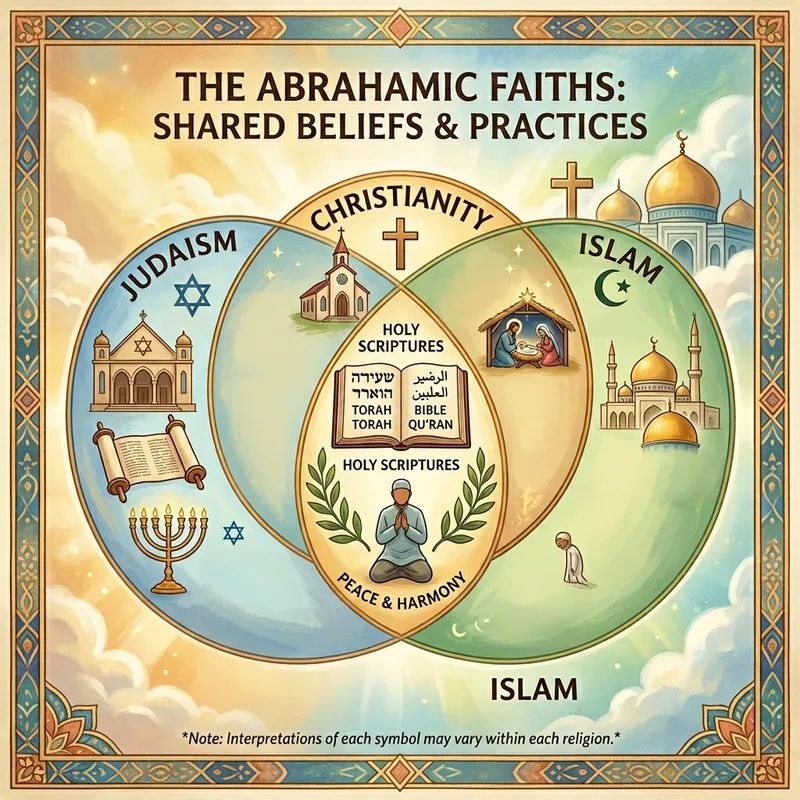
While adherents of each tradition share a monotheistic worldview, they often wrestle with how to balance their shared origins with their unique theological differences.
"Do we see Abraham the same way? All too often in interfaith dialogue we want to subsume those differences because we want to be polite. What brings us together, what our commonality is, has to be our shared values."
Real unity doesn't require pretending the differences don't exist. It's built on shared values — love, justice, compassion, and devotion to the One God — held honestly alongside our distinct traditions.
"From my experience, most Christians object to the God of Islam being the same as the God of Christianity while thinking they follow the same as the God of Judaism…"
Why it matters
These tensions are exactly why dialogue matters. When we name our differences with respect and lean on our shared foundations, we move from suspicion toward understanding — from three competing teams to one family under One God.